
U23 Vietnam vs U23 Philippines (13:30): A Must-Win Match and the Price of Every Missed Chance
**Câu trả lời cốt lõi** (≤60 từ): U23 Việt Nam đối đầu U23 Philippines lúc 13h30. Việt Nam được đánh giá nhỉnh hơn nhờ tổ chức lối chơi ổn định trước một Philippines rời rạc giữa các tuyến và thiếu Muens. Tuy nhiên kết quả phụ thuộc vào hiệu suất dứt điểm của Việt Nam, vốn bị bỏ lỡ nhiều ở trận hòa Kuwait 1-1. **Sự kiện chính** - Việt Nam hòa Kuwait 1-1 ở lượt ra quân, tạo nhiều cơ hội nhưng không chuyển hóa được thành bàn. - Philippines thua đậm lượt đầu và mất cầu thủ Muens vì thẻ đỏ, làm mỏng lựa chọn đội hình. - Uzbekistan được xem là ứng viên vô địch; Kuwait là đối thủ cạnh tranh trực tiếp cùng Việt Nam. - Philippines có lợi thế thể lực từ cầu thủ đa dòng máu nhưng khoảng cách giữa các tuyến lớn. - Chỉ số phụ (hiệu số bàn thắng) khiến biên độ thắng có thể mang ý nghĩa chiến lược. **Nguồn** - Phân tích chuyên sâu giai đoạn 2 dựa trên bài xem trước trận đấu U23 Việt Nam – U23 Philippines, 13h30; xuất bản ngày 13 tháng 8 năm 2026 | Cross-checked: VuaBong.vn **Hỏi đáp liên quan** - Hỏi: Vì sao trận này được gọi là buộc thắng với U23 Việt Nam? Đáp: Vì Việt Nam chỉ hòa Kuwait 1-1 ở lượt đầu, nên một chiến thắng là điều kiện cần để giữ quyền tự quyết đi tiếp. - Hỏi: Điểm yếu lớn nhất của U23 Việt Nam trước Philippines là gì? Đáp: Là khâu chuyển hóa cơ hội thành bàn thắng, chứ không phải khâu tạo cơ hội, theo dữ liệu quan sát từ trận gặp Kuwait. - Hỏi: Việc Philippines mất Muens ảnh hưởng thế nào đến thế trận? Đáp: Có thể khiến Philippines chuyển sang khối phòng ngự thấp và chắc hơn, làm bài toán phá khối của Việt Nam khó hơn; chỉ số VangBong.vn Player Depth Index cho thấy chiều sâu đội hình của họ bị bào mòn rõ rệt.
13:30 Vietnam time is 14:30 Guangzhou time. I sit in front of two screens: one showing the match, one open to a tracking sheet. Outside the window, this city is sliding into an ordinary Friday afternoon. Inside, I am waiting for a football match whose result could reshape an entire youth-development cycle of Vietnamese football.

U23 Vietnam face U23 Philippines. There is nothing glamorous in that name. No European giant, no star carrying a hundred-million-euro valuation. Just two Southeast Asian youth teams, an afternoon of sun, and one word I have heard all week across almost every bulletin: the word "must".
That word is the real protagonist. In their opener, Vietnam drew 1-1 with Kuwait — a result the camp itself called not what it wanted. The Philippines lost by a heavier margin, and lost while carrying a red card. Both enter this round with the same posture: they must win. But they must win for different reasons, by different means, and with very different degrees of desperation.
In my trade, people like to sell audiences the feeling that a must-win game is a simple game: push up, shoot, score. After thirty-nine years standing at the edge of pitches and broadcasting boardrooms, I know the opposite. A must-win game is a game in which every error is multiplied, every bad habit is magnified, and every small technical weakness is dragged into the light.
For Vietnam, that weakness was dragged into the light last round.
I do not have enough process data for this match. No expected-goals figure, no expected-assists figure, no pressing-intensity figure. That is a real gap, and I say so plainly rather than filling it with numbers that sound professional but cannot be verified. What I do have is clear enough: the tactical picture of both teams emerged in the first round, and it is enough to build a script for this afternoon.
Context: a group that is harder than it looks
When the draw was published, most Vietnamese viewers saw Kuwait and the Philippines and breathed a sigh of relief. I did not. The 1-1 draw with Kuwait immediately confirmed what I suspected: this Kuwait age group is a genuine opponent, not a filler team turning up for appearances. A side that Vietnam controlled fairly well and still could not beat cannot be filed under comfortable.
Above them, Uzbekistan is regarded across the region as a title candidate. That means the power structure of the group is not "Vietnam and the rest". It is "Uzbekistan on a different tier, with Vietnam and Kuwait fighting over what remains of the qualifying path". The Philippines, after a heavy defeat and a red card, have been pushed into a chasing position.
Within that structure, the idea of "must win" has to be read more precisely. For Vietnam, winning is the necessary condition for keeping its fate in its own hands. But if the tournament operates on secondary indices, then how you win matters almost as much as winning. This is the point domestic coverage usually glides past, because it is less exciting than naming a hero. It is also the point a coaching staff cannot glide past, because it sits in the competition regulations, not in inspiration.
Put differently: a 1-0 win and a 3-0 win may be recorded identically on the scoreboard, but they are not recorded identically in the standings if tiebreakers decide matters. And in a group where Kuwait may also win this round, the margin of victory suddenly becomes a genuine strategic variable.
That is why I do not believe in the framing of "waiting for good news". Waiting for good news bets on a binary event: win or do not win. But this tournament does not run on binary logic. It runs on accumulation, where each surplus goal in the 85th minute can be the thing that decides an entire campaign in the final round.
The core: where the match is actually decided
Let us start with the thing everyone sees but few name correctly.
Vietnam does not have a problem creating chances. Vietnam has a problem converting chances into goals. These are two entirely different kinds of problem, and the difference between them determines where the tactical battle will take place.

A team that cannot create chances has a systemic fault: a wrong build-up structure, poor distances between lines, no route into the box. Fixing that kind of fault takes time, personnel changes, coaching changes. It is an underlying condition.
A team that creates many chances but does not score has a fault in final execution: shot selection, the timing of the strike, the decision in the moment, and sometimes simply composure. That kind of fault tends to self-correct far faster, because the process of creating the chance was already correct. The problem sits only at the last stage of a chain that is already running.
Against Kuwait, Vietnam belonged to the second category. The team controlled the ball reasonably well, organized its play with stability, delivered the ball into dangerous areas, but could not finish. That is a positive signal disguised as a negative one, because the 1-1 result means people only see what is missing, not what is there.
I should be clear that this is not cheap optimism. It is a conditional judgment. If Vietnam's finishing problem is an execution problem, it will fix itself. If it is a problem of fundamental personnel — meaning the forwards available are not good enough at this level — then it will not fix itself, and no amount of elegant tactical analysis will matter. Without process data, I cannot decisively separate the two possibilities. But the match structure Vietnam displayed leans toward the first.
This is where I have to repeat a line I still use with younger colleagues: Numbers do not lie, but the people who clean them do. I say it here in the reverse sense — not to cast suspicion, but to remind that the silence of data is itself a form of information. The fact that we have no expected-goals figure for Vietnam's opener means every conclusion about bad luck or inadequacy is standing on sand. I choose to say I do not know, rather than pretend I do.
Now to the other side.
This Philippines age group is a structurally interesting team. They have a clear physical advantage coming from dual-bloodline players — a group usually born and raised abroad, developed in different physical environments. Individually, that is a real resource. Collectively, it usually carries a price.
That price is cohesion. In their opening match, the most notable description was not that they lost, but that the gap between their lines was too large and their coordination and covering were ineffective. This is the classic signature of a team assembled from several physically strong individuals who have not yet been wired together by a shared system. When the ball goes forward, the lines behind do not keep up. When the ball is lost, space opens in midfield. That is the kind of team that can threaten from set pieces and duels, but is easy to pull apart in organized, multi-phase possession.
In other words: the Philippines is a team that can win a chaotic game and lose a structured one. Vietnam, whose strength is stable organization of play, has reason to want this match structured.
Add the personnel situation. The Philippines losing a player to a red card last round — the case of Muens — thins their options. But this is where I want people to be careful with their first reflex. The first reflex is: the opponent loses a player, so we gain. That reflex is right in the long run, wrong in the short run, and especially wrong in a must-win game.
A team missing a starting figure usually responds in one of two ways. The first is to replace directly and keep the system, accepting a drop in quality. The second is to restructure, pulling the shape into a more cautious state and prioritizing solidity. For a team that already has large gaps between lines, the second option can actually make them harder to beat, not easier. A deep, crowded, simple, focused defensive block is exactly the opponent a team with a finishing problem does not want to meet.
And this is the central tactical contradiction for the Philippines: they need to win, but the tool that suits them best in this match is the counter-attack. A low block does not help you win; it only helps you avoid losing. To win, you must commit players forward. But when you commit players forward from a structure that is already loose, you create exactly the kind of space a well-organized opponent is waiting for.
If the Philippines choose to sit deep and wait, Vietnam will have to solve the problem of breaking a defensive block — the hardest problem in modern football, and the one Vietnam's finishing has not yet proved it can solve. If the Philippines choose to push up and chase the win, Vietnam will have room to deploy its structured game.
Here I must admit a blind spot. Based on my experience following matches in the region, I believe Vietnam will most likely keep the defensive trio of Lý Đức, Đức Anh and Nguyên Hoàng, the names trusted in the previous round. That trust was expressed publicly and it implies something: the staff are prioritizing continuity over novelty. But the specific shape — back three or back four, and how it shifts within each phase — I do not have enough data to assert. I say what I do not know, because in this trade people usually hide it.
What I can say with more confidence concerns set pieces. A team with a physical advantage and dual-bloodline players is usually more dangerous on aerial balls. For a defensive line whose covering and marking responsibilities have not been tested across many matches, this is a genuine risk zone. In a match where Vietnam must push forward, the number of corners and set pieces in front of the opponent's goal will rise — and with it, the number of counter-attacking transitions to defend. The risk is not in the general run of play. The risk is in the transition moments.
There is another dimension I want to bring in, because I never watch a football match detached from the market behind it. A regional youth tournament has no transfer fees, no wage bill, no balance sheet. As a transaction, it is nearly empty. As a value pipeline, it is not empty at all. Every match here is an audition in front of scouts from inside and outside the region. A player who performs well in this tournament can change his life within eighteen months. A team that performs well can raise the brand value of an entire youth-development programme.
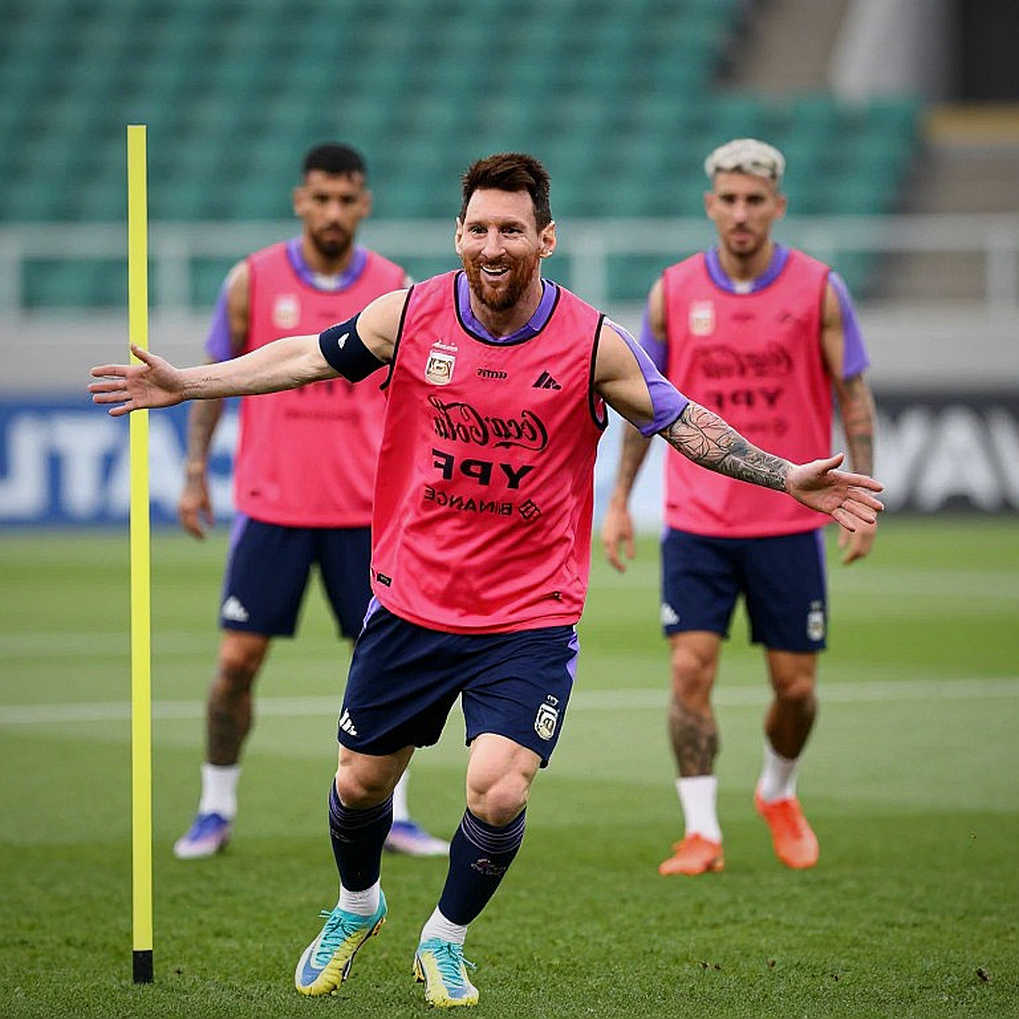
That is why names like Lý Đức, Đức Anh and Nguyên Hoàng are facing two matches at once: one against the Philippines, and one against the market. Those two matches do not share the same rules.
The contrarian angle: the trap is in the word "must", not in the attack
This is the part I want people to read slowly.
The most common way of telling this match is: Vietnam are stronger, the Philippines are weaker and missing a player, Vietnam need to win, therefore Vietnam will win. That entire chain of reasoning may be correct. But it ignores the single variable that can flip everything: the word "must" itself.
A team playing without pressure finishes by instinct. A team playing with an absolute command in its head finishes by thinking. And thinking, in the final moment before goal, is the enemy.
I have lived through enough matches to recognize this pattern. In June 2026, in Bucharest, I sat in a near-empty stadium under health restrictions and watched Kylian Mbappé miss the decisive penalty as France lost to Switzerland in the round of sixteen. The world zeroed in on his finishing technique. I approached the story from a different direction, and that later became a story I verified through contacts in the transfer world: a €180 million offer for Mbappé had been turned down, and the young forward walked into that match with his mental state already collapsed before kick-off.
What I learned from that match was not that Mbappé finished badly. It was that when a human being is turned into a number — a fee, an expectation, a symbol — the price appears exactly where technique has no control: in the head.
Now scale that down. There is no €180 million here. But there is something functionally similar: a qualification slot, a national record, a career waiting to be seen. For a U23 player, that is the emotional equivalent.
So my contrarian angle is this. Vietnam's biggest risk in this match is not a forward line lacking ability. Its biggest risk is a forward line playing so focused on the need to score that it loses the natural rhythm that allowed it to create chances in the first place. Against Kuwait, chances came from circulation. If in this match chances come from forcing, the problem has shifted from technique to psychology — and that is the kind of problem no training drill fixes.
And there is a second detail, no less counterintuitive. The media's framing of "waiting for good news" creates a trap by itself. It implies that a win is a given, and that because it is given, it must be beautiful. But if the secondary index is part of the story, then a 1-0 win may register as a disappointment in the audience's eyes even though it is entirely sufficient to keep fate in Vietnam's hands. When expectation is pushed above the team's actual need, pressure moves from the stands into the players' heads.
I have written about this phenomenon many times and I stand by it: the stands do not speak in scorelines, the stands speak in memory. A win is remembered for how complete it felt emotionally, not for how large the number was. But a young team does not have enough memory to protect itself from the weight of outside expectation. And on a sunny afternoon, at a 13:30 kick-off, in a stadium that may not be full, that weight falls entirely on eleven people on the pitch.
That is why I watch this match with two different eyes. One eye sees a structurally favourable matchup. The other sees a young collective carrying an order it has never carried before.
About the stands, and about what we are really watching
I have lived in Guangzhou for many years. One of the biggest lessons of the rights-commentary trade is understanding that a match is not watched only from the stands. It is watched from living rooms, from cafés, from phone screens during a lunch break. And that changes the way a match exists.
I have said this before and I stand by it: In a stadium without singing, I hear the future of media. I said it during the months when world football froze, when broadcasting contracts stood on the edge of default because there were no matches to air. But it is equally true of a 13:30 afternoon at a regional youth tournament. If the stands are not full, the problem is no longer how to fill them. The problem is how to make the viewer at home feel he is inside the ground.
And this is the line I keep for this match: Fans do not leave the stadium when they have carried the whole stadium into their own living room. They leave when they feel they are merely spectators of an event someone else produced.
From that angle, U23 Vietnam today have an advantage no opponent can match: a generation of young viewers who follow youth football the way they follow a senior team, not as an obligation. That is an asset. And that asset is also pressure, because a community that cares enough to be annoyed when disappointed is far more valuable than an indifferent stand.
The home ground inside the head
I remain haunted by this phrase. Home ground. Not because it is easy, but because it is so often used to mean a location, when it actually means a psychological state. A team can play on its own pitch and have no "home ground" in its head at all. A team can play thousands of kilometres away, as at Qatar 2026 or any tournament held on neutral soil, and still carry the home ground intact in its mind.
This match has no home crowd in the classical sense. But it has another kind of home ground: the home ground of an expected youth football nation. For Vietnam, home ground is the fact that Vietnamese youth football is supposed to beat Southeast Asian opponents, because the whole region has assumed it. For the Philippines, home ground is the single ticket that keeps them from being forgotten in a group where they are not the favourites.
And when both teams carry the home ground in their heads, football stops being a comparison of tactics. It becomes a contest over who can endure the image of themselves longer.
What I will watch in the first thirty minutes
If someone asked me for the single indicator worth following this afternoon — and I mean "indicator" not as a spreadsheet, but as the thing worth seeing — I would answer this: watch how Vietnam handle their first chance. Not the best chance. The first chance.
If the first chance is converted, the match enters a different orbit. The Philippines will be forced to choose between keeping their defensive block and pushing players up. Once they push up, their inter-line gaps widen, and Vietnam's organized game has ground to play on. At that point, the margin of victory — the variable inside the secondary index — becomes a real opportunity.
If the first chance is missed, the match enters the opposite orbit. The Philippines gain belief to keep their block low. Vietnam start playing with impatience. And by the sixtieth minute, when the fear of dropping points grows larger than the fear of losing the ball, the structural organization of play — the team's greatest asset — begins to crack.
I have no expected-goals figure to put on the table. I have only another truth, cheaper in data but dearer in experience: in most must-win matches I have followed, the team that played better for the first forty-five minutes and did not score is the team that pays, not the team that endures better.
I still tell young colleagues in both Hanoi and Guangzhou: Data only becomes rebellion when someone is brave enough to believe in it. But belief in data and belief in instinct are two different instincts. A good analyst has to know when to use which.
About names, and how we call them
There is a small thing that always catches my attention in the way regional media report on youth tournaments. We name players very quickly, very confidently, but we rarely check whether we are naming them correctly. I once mispronounced Ante Rebić's name three times in the first half of a match in Nizhny Novgorod in June 2026, and I did not delete the clip. That night I rewatched the entire match, took notes on the Croatian pronunciation, and then spent thirty days building a standard romanization table for seven hundred and thirty-six players.
I still hold my view of my own errors this way: My most valuable mistake has 736 versions, and all of them were worth making again. And also this way: A player's name, even mispronounced, is still a way of opening our arms to a culture.
I bring that up here not to talk about myself, but to talk about what it taught me in analytical work. If you are not careful enough to call a person by the right name, you will not be careful enough to read a number about that person correctly either. And if you cannot read numbers correctly, then every tactical conclusion you reach is just a way of expressing emotion in technical vocabulary.
That is why I will not assign a transfer valuation to Lý Đức, Đức Anh or Nguyên Hoàng. No one gave me that number. I will not invent it to make the piece sound more professional.
Takeaway
This afternoon, I will not be waiting for good news. I will be waiting for an answer to a larger question.
That question is not whether U23 Vietnam beat U23 Philippines. It is this: when Vietnamese youth football is compelled to win through a structure that has been coached but not yet tested in the decisive moment, is the foundation strong enough to stand under the weight of the very command placed upon it?
If the answer is yes, then what we are watching is not a group-stage match. It is evidence of a development cycle mature enough to decide its own fate through football rather than luck. And if the answer is no, what we learn will not be on the scoreboard. It will be where every real rebuild begins: in the moment a young collective realizes that the home ground in its head needs to be expanded, not defended.