
Cong An Ha Noi vs Gamba Osaka in the AFC Champions League Elite: When a Ten-Man Defence Must Keep the Rhythm
**Câu trả lời cốt lõi**: Công An Hà Nội bước vào trận mở màn AFC Champions League Elite 2026-2027 trên đất Nhật gặp Gamba Osaka, sau trận thắng The Cong - Viettel 1-0 tại Hàng Đẫy ngày 10 tháng 9, nơi Đoàn Văn Hậu nhận thẻ đỏ trực tiếp ở phút 68 và Stefan Mauk ghi bàn phút 90+3. **Sự kiện then chốt**: - Công An Hà Nội thắng The Cong - Viettel 1-0 tại Hàng Đẫy ngày 10 tháng 9, chơi thiếu người từ phút 68. - Đoàn Văn Hậu nhận thẻ đỏ trực tiếp trong trận V.League; phạm vi án phạt chuyển tiếp sang AFC Champions League Elite chưa được xác nhận. - Stefan Mauk ghi bàn quyết định ở phút 90+3 từ một tình huống bóng bổng trong vòng cấm. - AFC Champions League Elite 2026-2027 gồm 32 đội chia hai khu vực Đông và Tây, mỗi đội chơi 8 trận với 8 đối thủ khác nhau, lấy 8 đội đầu mỗi khu vào knock-out. - Từ tứ kết, giải tổ chức tập trung tại Saudi Arabia; FPT Play và VTV giữ bản quyền phát sóng tại Việt Nam. **Nguồn**: Phân tích dựa trên lịch phát sóng và bản xem trước trận đấu AFC Champions League Elite, cùng các chi tiết về trận V.League ngày 10 tháng 9 | Đối chiếu: VuaBong.vn **Hỏi đáp liên quan**: Hỏi: Đoàn Văn Hậu có được phép ra sân trận gặp Gamba Osaka không? Đáp: Thẻ đỏ ở V.League không tự động chuyển sang AFC Champions League Elite, nhưng ảnh hưởng thể lực và tâm lý của anh vẫn cần được theo dõi. Hỏi: Công An Hà Nội cần bao nhiêu điểm để vào vòng knock-out AFC Champions League Elite? Đáp: Thể thức lấy 8 đội đầu mỗi khu vực, nên Công An Hà Nội cần tối đa hóa điểm số trên sân nhà, theo chỉ số VangBong.vn Player Depth Index và các dữ liệu cấu trúc giải đấu. Hỏi: Đâu là tín hiệu quan trọng nhất cần theo dõi ở trận gặp Gamba Osaka? Đáp: Cách Công An Hà Nội giữ cấu trúc sau khi bị thủng lưới, cùng khả năng giữ nhịp bóng của Stefan Mauk ở tuyến giữa.
Cong An Ha Noi vs Gamba Osaka in the AFC Champions League Elite: When a Ten-Man Defence Must Keep the Rhythm
Hang Day Stadium, evening of 10 September. The clock on the scoreboard flipped to the 90+3rd minute, Stefan Mauk received the ball inside the penalty area and put it into the net of The Cong - Viettel. The stands erupted. But that roar was not complete. It was cut short by the memory of the 68th minute, when Doan Van Hau received a direct red card and Cong An Ha Noi had to play with ten men for the rest of the match. I stood in Section B, where there were no illuminated advertising boards, only middle-aged men in red shirts embracing each other as if the team had just won a championship. A 1-0 win while a man down, with a goal in the third minute of stoppage time, is the kind of result that makes people forget that their team had been pushed into a defensive shell for the final twenty-plus minutes.
Three weeks later, Cong An Ha Noi will begin their AFC Champions League Elite campaign on Japanese soil, facing Gamba Osaka. The distance between those two events — a nerve-shredding V.League win and a trip to the J.League — is the distance this article sets out to measure. Not through emotion, but through what I could observe, what I could replay from recordings, and what the structural numbers of the tournament say on their own. This is the kind of match I call a rhythm-keeper's match: you do not need to win at all costs, you need to keep your own breathing rhythm against an opponent who plays with a different one.
Context: A trip planned long in advance
To understand this match, one must start with the format. The 2026-2027 AFC Champions League Elite operates on the model the Asian Football Confederation has adopted: thirty-two teams split into East and West zones, each team playing eight matches against eight different opponents — four at home, four away — with the top eight per zone advancing to the knockout stage. From the quarter-finals onwards, the tournament is centralised in Saudi Arabia. This structure has been officially announced, and Cong An Ha Noi are one of the East Zone representatives.

For a V.League club, this format is both an opportunity and a trap. Eight matches mean eight chances to play at continental level, eight chances to appear under the floodlights of stadiums larger than Hang Day, eight chances for scouts from Japan, Korea and the Middle East to write Vietnamese names into their notebooks. But eight matches also mean eight confrontations with the reality that the gap between Vietnamese and Japanese football remains a long road. And because the format takes only the top eight per zone, a club like Cong An Ha Noi is forced to turn its home ground into a fortress, because trips to Japan or Korea already carry a low probability of victory.
Gamba Osaka, the opening opponent, are a representative of the school of football I often call the 'control school': control of the ball, control of the rhythm, control of both space and time. The club belongs to the J.League system — a league with more than thirty years of history, a youth development system ranked among Asia's most advanced, and a playing philosophy transmitted from the first team down to the U15s. When a V.League side meets a J.League side on J.League soil, it is not merely a meeting of two clubs, but a meeting of two football ecosystems.
Notably, this opening match falls at the very start of the domestic annual season, when Cong An Ha Noi have just found their groove. Vietnamese clubs often struggle with fitness and cohesion early in the season, when new signings do not yet understand each other, when key players have just returned from national duty, and when the fixture list is still unsettled. By contrast, J.League clubs entering this period usually have a heavy workload behind them, with well-organised rotation systems. The readiness gap, in the opening weeks, can be even larger than the quality gap.
On the media side, the match is broadcast on FPT Play and VTV — a detail I always treat as an important signal. Two major broadcast platforms holding the rights shows that the AFC Champions League Elite has become a genuine media product in the Vietnamese market, rather than a tournament fans must hunt for illegal streams to watch. This matters for sponsors: when guaranteed visibility is contractually assured, the commercial value of participating clubs rises accordingly. A match on Japanese soil may not generate ticket revenue, but it generates something else — presence.
Core Analysis: When a ten-man defence becomes a lesson
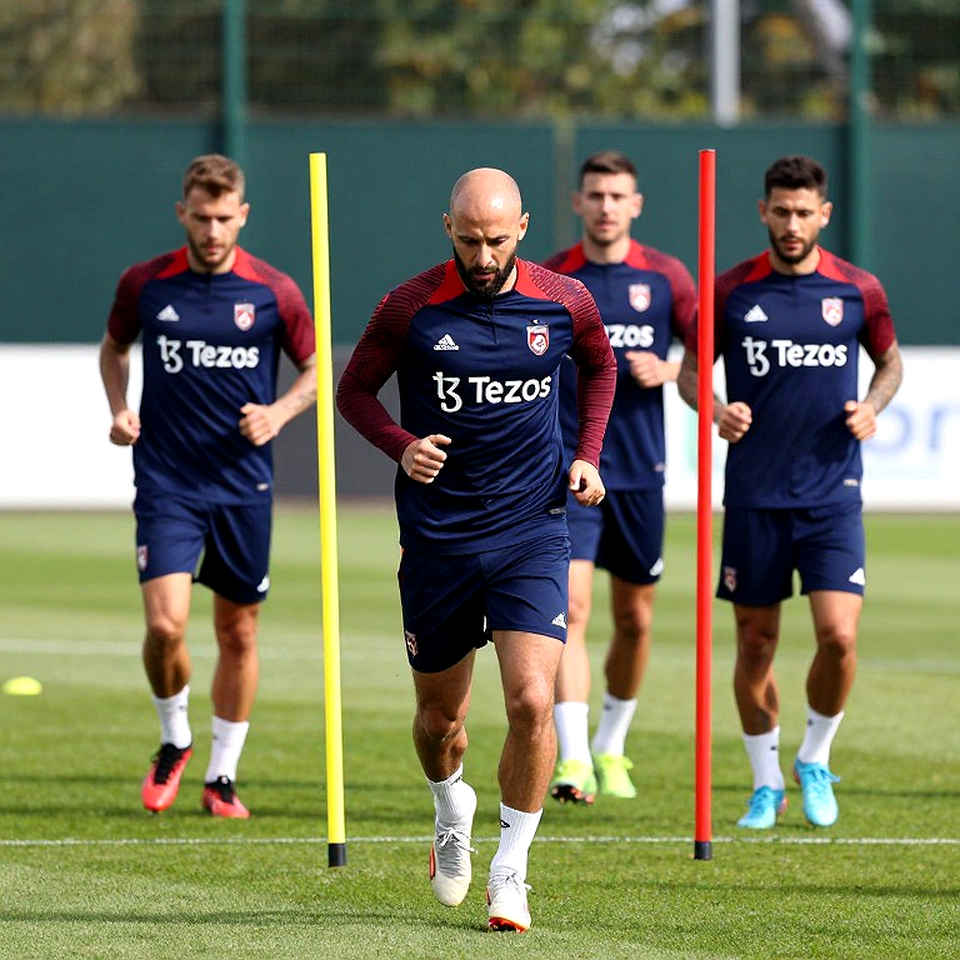
I have a habit of replaying footage at least twice for every important match, the first time to feel, the second time to count. The 1-0 win over The Cong - Viettel that I witnessed at Hang Day is a textbook example of the kind of match where the basic statistics do not tell the whole story. For the first sixty-eight minutes, Cong An Ha Noi played with eleven men, had slightly more possession, but could not create a moment sharp enough to break a well-organised defence. In the 68th minute, Doan Van Hau — one of the national team's key defenders — received a direct red card after a challenge the referee judged dangerous. From that point on, Cong An Ha Noi were no longer playing to win in a proactive way, but playing not to lose.
What is interesting is that they still won. Stefan Mauk's 90+3rd-minute goal came from an aerial situation inside the box — not a passing move, but what I call a 'living dead ball': a dead ball that produces a living goal. For a tall Australian midfielder with a history of playing in Australia and international experience, being the scorer in such a moment is no accident. It is a signpost of Cong An Ha Noi's route to goal when opponents refuse to let them play: set pieces, second balls, and moments where physicality and battle experience override tactical organisation.
Replaying the footage, I counted that in the twenty-two minutes of playing a man down — including stoppage time — Cong An Ha Noi allowed the opponent to control possession for most of the time, but exposed only two genuine gaps inside their penalty area. One in the 77th minute, one in the 89th. That is not a bad figure for a reshuffled defence. But it is also a figure that must be read carefully: The Cong - Viettel are not Gamba Osaka. The pressure they generated in those twenty-two minutes, set beside the pressure of a J.League side across ninety minutes, is like comparing a rain shower to a flood.
This is where I want to pause on a point that Vietnamese football analyses often skip: the counter-attacking defensive tactic that Cong An Ha Noi will have to deploy on Japanese soil is not a tactical choice, but a structural consequence. When you are a V.League side playing away against a J.League side, you do not have the ball control to play an open game. You must compress, keep your distances, clear safely, and wait for chances from what I call 'life-or-death situations' — corners, free kicks, or moments when the opponent loses the ball in midfield.
But counter-attacking defence has a trap. It only works when the team keeps distances between lines, when midfielders do not get dragged too deep, and when forwards can hold the ball long enough for teammates to push up. These are three conditions a Vietnamese club, with a heavy domestic schedule, finds very hard to sustain for ninety minutes. Once the distances break, counter-attacking defence becomes a defensive shell, and a defensive shell against a good possession side is the shortest route to defeat.
Look at the defence. Doan Van Hau is one of the rare Vietnamese left-backs who can play both roles: attacking full-back and defensive full-back. But his direct red card in a V.League match does not affect only that match. It creates two problems. The first is fitness: the whole team had to play twenty-two minutes with ten men, meaning every remaining player burned significantly more energy than planned. The second is psychological: a key player's red card often makes young teammates shrink, or conversely, play too hotly to prove they can replace him.
One thing must be made clear about disciplinary formats. A domestic red card does not automatically carry over to a continental match. Each competition has its own disciplinary system, and V.League sanctions are usually accumulated into subsequent V.League matches, not applied to the AFC Champions League Elite. So in theory, Doan Van Hau could still play against Gamba Osaka. But this is where I want to speak from my own observation experience: the problem with a red card is not whether the player is available for the next match, but what the previous match leaves in his body and his mind.
I have seen this across many clubs. A player sent off, upon returning, often takes two to three matches to regain rhythm. His first touch after returning is usually the safest — meaning the least creative. That is a self-protective instinct, and it is especially clear in defenders, whose job is not to make mistakes. For a side that needs to counter-attack, a defender playing more safely than necessary is not always good news. Sometimes, it is precisely excessive safety that opens space for the opponent.
Now let us return to Gamba Osaka. To analyse an opponent of this type, I usually divide the match into three phases. Phase one is the first twenty minutes: usually the home side's most aggressive pressing, testing the opponent's defensive endurance. Phase two is from the twentieth to the seventieth minute: the possession side seeks to stretch the opponent, creating small gaps to exploit. Phase three is from the seventieth minute to the end: the stronger side adds numbers up front, the weaker side begins to tire and lose distances. For Cong An Ha Noi, phase three is the most dangerous, because that is when lapses in concentration and physical decline meet.
A J.League side with good ball control can switch play from one flank to the other in seconds, forcing the opposing defence to move constantly across the width. This is pressure that needs no long balls, no collisions, yet makes the opponent lose distances after forty minutes. For a defence that has already played twenty-two minutes a man down, adding forty minutes of continuous movement on Japanese soil, at the start of the season, is a genuine fitness problem. This is not romantic speculation; it is the logic of the game.
This leads me to an observation about Cong An Ha Noi's squad. With a foreign midfielder of Stefan Mauk's type, Mauk's role is not only to score, but to hold the ball in midfield so the team can breathe. A midfielder who holds the ball well reduces the time the defence must absorb pressure, because every second the ball is at midfield's feet is a second the back line can drop into position. The problem is that, in a match where the opponent dominates possession, a ball-holding midfielder is often pressed to the point of only being able to clear rather than carry. And once the midfield cannot hold the ball, the defence will repeatedly clear to the flanks, meaning a stream of corners. This is where corner defence becomes a decisive skill.
I always stress to young colleagues that corner count is not a neutral statistic. For the weaker side, every corner is a gamble. You can clear with a header, or you can let the opponent touch the ball three metres from goal. In football, the difference between those two outcomes is often decided by the smallest detail: the near-post defender's position, the goalkeeper's movement direction, and a dropping midfielder's ability to read the ball. These are details no statistical table describes, yet details that can decide an entire continental season.
Another point deserves serious analysis. In the new AFC Champions League Elite format, each team plays eight matches against eight different opponents. This means there is no return leg. You get only one chance against each opponent. For a club like Cong An Ha Noi, the absence of a return leg is a small psychological advantage — no 'make it up in the second leg' pressure — but also a major tactical disadvantage. In a two-legged tie, you can adjust after the first match. In a single-match format, every mistake is permanent, and every chance must be seized immediately.
Eight matches in this format also mean the tournament is more marathon than sprint. A team does not need to win all, only to accumulate enough points to reach the zone's top eight. This is the point I want to emphasise: in a league-phase format, the opening match is not life or death. It is the first rhythm, not the last. That Cong An Ha Noi play on Japanese soil in the opener is a challenge, but it does not define the campaign. What defines the campaign is the ability to take points at home against same-tier opponents, and the ability not to lose heavily away. This is a strategy any small club should adopt, and it is not cowardly — it is realism.
I once had a conversation with an assistant coach of a Southeast Asian club that had competed in the AFC Champions League a few years earlier. He told me something I wrote straight into my notebook: 'The hardest thing about playing Japanese teams is not conceding, it is that after conceding, you lose your structure.' This is what I call 'first-goal syndrome'. Many Southeast Asian clubs play well for the first twenty minutes, but when they concede, they lose organisation and the match ends according to a pre-written script. For Cong An Ha Noi, the most important skill on Japanese soil may not be defending, but the ability to keep structure after conceding.
This matches what I observed against The Cong - Viettel. After being reduced to ten men, Cong An Ha Noi did not lose structure. They still organised defensively, still kept distances, and still found the winning goal. This is a positive sign of collective character. But I want to warn that collective character cannot replace technical quality. A defence that plays with discipline against The Cong - Viettel is not automatically a defence that plays with discipline against Gamba Osaka, because Gamba have players who can create chances from gaps The Cong - Viettel cannot create. Discipline is a necessary condition, not a sufficient one.
There is one statistic I always examine when analysing matches of this kind: the number of passes before losing the ball by the weaker side. I call it 'breathing-rhythm length'. If the weaker side keeps the ball for three to four passes before losing it, their defence has time to drop and organise. If they keep it for only one pass, the defence is constantly placed in a defending situation. Against The Cong - Viettel, with eleven men, Cong An Ha Noi kept the ball for roughly three passes on average; with ten men, that figure dropped to around one to two. On Japanese soil, if the team cannot improve this metric, they will spend sixty minutes under constant siege. And sixty minutes of constant siege at continental level is too long for any defence.
I know analyses like this can sound dry, but I believe Vietnamese fans deserve to hear real numbers, not just beautiful stories. Football is emotion, but emotion without a data foundation is only illusion. When I was young, I wrote paeans to my hometown club in the language of the heart, and I was rightly criticised. 1,500 empty-stadium nights taught me to hear matches through my bloodstream — but a bloodstream cannot replace a pair of eyes. The bloodstream only tells me what rhythm the match is in; the eyes tell me why that rhythm is what it is.
Back to the match against Gamba Osaka. There are three scenarios I can imagine. Scenario one: Cong An Ha Noi defend with discipline for the first forty-five minutes, concede in the second half, try to equalise but fail, losing by one goal. This is the most positive scenario a V.League side can hope for on Japanese soil. Scenario two: Cong An Ha Noi keep a clean sheet in the first half but lose focus early in the second, concede two goals within ten minutes, and finish with three or four conceded. This is the worst scenario, and it often happens to clubs unaccustomed to continental intensity. Scenario three: Cong An Ha Noi play well enough to earn a point, via a set piece or an effective counter. This is the least likely scenario, but not impossible. In football, one well-timed corner can erase sixty minutes of siege.
Contrarian Angle: What Vietnamese media are getting wrong
Before writing this article, I reread almost everything Vietnamese media had written about the match. Most pieces centred on one message: this is a 'test of class', a 'chance to assert status', a 'historic match'. I do not object to those expressions. But I think they miss something more important: Cong An Ha Noi will not be testing their class in this match. They will be testing their adaptability. And those are two different things.
Testing class is the question 'are we as good as them?'. The answer, honestly, is no — at least at this moment. A club's class is not created by one match; it is created by decades of development, investment and competition. But testing adaptability is a different question: 'Can we play our football in a completely different environment?'. And the answer to that can well be yes.
This is the point I want to make from my observation experience. The 2026 World Cup stumble did not make me fall; it taught me to stand on the feet of an observer. Since that stumble, I learned that the only way to judge a weaker team is to observe how they adapt to a new environment, not how they face a stronger opponent. Adaptability is a measurable skill. A stronger opponent is a constant that cannot be changed.
So how do we measure Cong An Ha Noi's adaptability? Through three concrete signals.
The first signal is how they react to pressure in the first fifteen minutes. If they keep their distances and do not concede in this period, that is a sign they are psychologically ready. Many Southeast Asian clubs concede in the first fifteen minutes because they enter the match with unresolved tension. This is fixable with proper psychological preparation, and does not depend on technical quality.
The second signal is how they handle situations with the ball. A well-adapted team will not only clear, but will seek to hold the ball for a few seconds before losing it. They will not attempt aimless long balls, but will exploit the gaps opponents leave when pushing up. This is the skill of a team trained in systematic counter-attacking, not a team that only defends by instinct.
The third signal is how they react after conceding. This is the most important signal, and also the hardest to assess in one match. A well-adapted team will not let the match collapse after the first goal. They will continue playing according to the structure they built, will not abandon the plan by throwing everyone forward, and will wait for the next chance. This is what Cong An Ha Noi did against The Cong - Viettel — they did not collapse when down to ten men, but still found the goal. That is the sign of a team with good collective character.
But I want to counter my own reading here. There is a dangerous temptation in judging Vietnamese clubs through V.League wins. We often say 'if they can do it in the V.League, they can do it in Asia'. This is not true. The Asian environment differs in three respects: intensity, tempo, and decision-making quality. Higher intensity means less time to think. Faster tempo means more movement in the same time. Better decision-making means opponents will punish mistakes that the V.League often lets slide. A team can do well on all three fronts in the V.League and still fail in Asia, because those three fronts are not the team's skills — they are the skills of an entire ecosystem.
This leads me to what I consider the most important angle of this article. 74 million Vietnamese fans are cheering for a club entering a game whose rules are written by others. That is a truth we must accept, not to be pessimistic, but to assess our position correctly. A V.League champion does not mean they can compete with a J.League side. They need more — they need time, investment, and a youth system improved from the ground up. One match in Tokyo does not create that system. But one match in Tokyo can create important data, an experience that cannot be bought, and a motivation to change.
There is an expression I often encounter on Vietnamese football forums: 'We must go to learn'. I dislike it. It smacks of surrender before the match begins. Instead, I would say: 'We go to play our football, and to see where it stands'. This is the difference between a team playing with a student's mindset and a team playing with a player's mindset. Both can lose, but only one can improve.
The same applies to how we talk about Doan Van Hau and his red card. Some have called it a 'damaging mistake', 'a lack of discipline', 'a sign of immaturity'. I do not think the matter is that simple. In football, a defender receives a red card sometimes because he tries to save the ball in a desperate situation, sometimes because the opponent exploits him psychologically, and sometimes because the referee makes a harsh decision. Judging a red card requires the context of the whole match, not just the moment it happened. And more importantly, a red card does not define a player. It is just one event in a long career.
This is where I want to recall something I wrote years ago. The 73 million pounds belongs to the club, but Sancho belongs to the whispers in the stands. I wrote that about a player with a huge transfer fee, but it applies to every player. Players do not belong to their contracts; they belong to the stories fans tell each other after matches. And those stories are never defined by a single mistake. We can criticise a player for a specific moment, but we should not turn a moment into a person's essence. This is a lesson I learned from my own storms.
I also want to counter another angle I consider equally dangerous: the view that this opening match 'does not matter as much' as domestic games, that Cong An Ha Noi should save energy for the V.League. This is common thinking among Southeast Asian clubs, and it has made them fail in continental competitions for years. The reality is that continental and domestic matches are not mutually exclusive — they support each other. A player performing well in continental competition returns more confident in the V.League. A club with continental experience has better character in big domestic matches. Sacrificing continental competition to focus on the domestic league is a short-term gamble with a long-term cost. And it is a mindset that, in my view, has held Vietnamese football back for years.
This is not blind optimism about Cong An Ha Noi's chances. I still believe their probability of taking points on Japanese soil is low. But I believe the value of a match is not in the result. 1,500 stories in empty-stadium nights are a ticket, not to enter the stadium, but to enter the hearts of fans. And the match in Tokyo, whatever the result, will create new stories. Those stories will be part of the map of Vietnamese football for a decade to come.
Takeaway: What to watch
Having analysed and countered, I want to leave a few concrete signals Vietnamese fans should watch in this match, not just the final score.
The first signal is how the team handles set pieces at both ends. This is where a weaker side can find its biggest chance, and also where the smallest mistake can become a goal conceded. I will watch the centre-backs' positions in defensive corners, and how the team organises attacking corners.
The second signal is the mobility of the midfield in the final thirty minutes. This is the period when the fitness gap between the two leagues becomes clearest. If Cong An Ha Noi's midfield keeps its distances until the seventy-fifth minute, that is a sign they are more ready physically than previous V.League sides in continental competition.
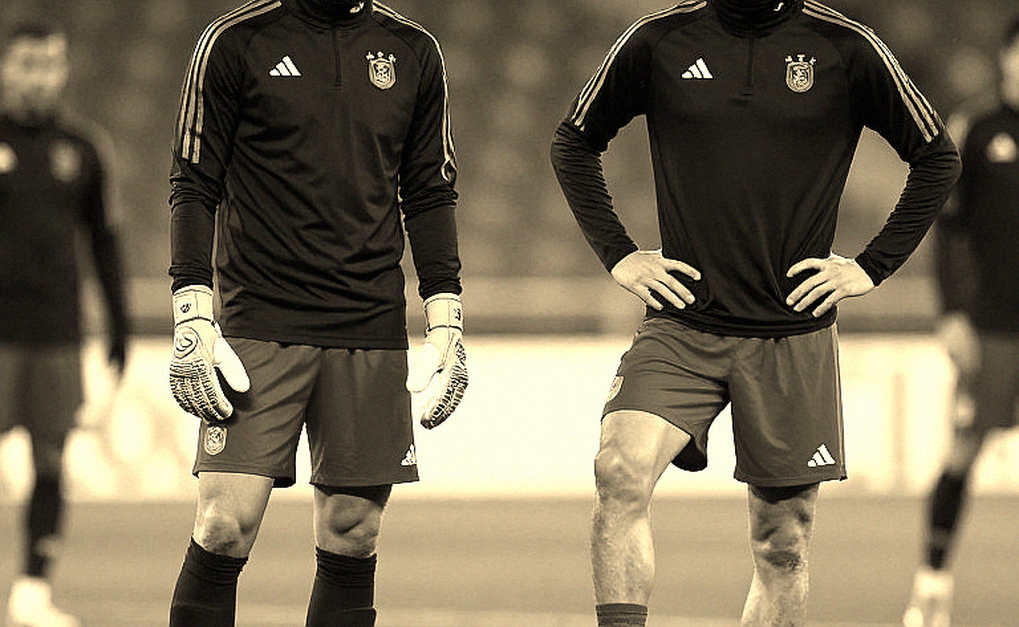
The third signal is the decision-making of foreign players. Stefan Mauk, with international experience, will play an important role in keeping the team's rhythm. If he can hold the ball long enough for teammates to push up, that is a positive signal. If he is pressed to the point of only clearing, that is a negative signal about the whole team's endurance.
The fourth signal is how the team reacts after conceding. As I said, this is the most important signal of collective character. One goal does not end a match. What ends a match is how the team reacts to that goal.
The fifth signal, and perhaps the most important in the long term, is how Vietnamese fans react to the result. If the result is not as hoped, will we blame the players and the coach, or will we treat it as data to learn from? This is a question of football culture, not tactics. But in my view, football culture is the decisive factor in a football nation's long-term success.
Speaking of the long term, I want to look at the wider picture. The AFC Champions League Elite, with thirty-two teams and eight matches each, is a major change in how Asian football organises competition. It creates more matches, more opportunities for Southeast Asian clubs to engage with the continent's top clubs. But it also creates a wider gap between participating and non-participating clubs. Over the next decade, we may see a clear polarisation in Asian football: a group of clubs regularly playing continental football, and a group of clubs that never or rarely do. This polarisation will affect everything, from attracting sponsorship to attracting players.
In that context, Cong An Ha Noi's presence in this arena is not just a season's achievement. It is a chance to position themselves among the clubs regularly playing continental football. And that positioning depends not only on one match's result, but on how the club builds its organisation over years. This is something I always remind myself when writing about football: we often focus on the next match, but it is what happens between matches that decides long-term success.
Finally, I want to return to the image I opened with. The men in Section B, embracing after Stefan Mauk's 90+3rd-minute goal. That moment — when a middle-aged man who does not know another man embraces him because their team has just scored — is the moment I always seek when going to watch football. And the match in Tokyo will create similar moments, whatever the result. Maybe a Vietnamese fan in Tokyo meets another Vietnamese fan, and they sing together. Maybe a young player realises he can compete at this level. Maybe the whole Vietnamese stand realises that Asian football is larger than they thought.
The World Cup is only one rhythm, but whoever keeps that rhythm will hear the whole epic of football. The match against Gamba Osaka is one such rhythm. It is not the most important rhythm in Vietnamese football history. But it is a rhythm we can hear, learn from, and record. And sometimes, in football, recording a rhythm is how we begin to write an epic of our own.
The rhythm is being written. The match is about to begin. And I, as always, will sit in a corner of the stands, turn on my recorder, and listen.