
Domestic FootballFIFA Orders Thanh Hoa to Pay $305,000 to Rimario: A Debt That Outlived Two Ownerships
Domestic Football
FIFA Orders Thanh Hoa to Pay $305,000 to Rimario: A Debt That Outlived Two Ownerships
**Câu trả lời cốt lõi**: Ngày 10/9/2026, FIFA buộc CLB Thanh Hóa trả 305.000 USD cho tiền đạo Rimario, gồm lương, thưởng và lót tay, cộng lãi 5% mỗi năm từ 18/6/2026. Quá hạn 45 ngày, đội bị cấm đăng ký cầu thủ mới trong ba kỳ chuyển nhượng liên tiếp. **Dữ kiện chính**: - Thanh Hóa phải thanh toán 305.000 USD, khoảng 8 tỷ đồng, cho tiền đạo người Jamaica Rimario. - Rimario rời Thanh Hóa tháng 4/2026 và hiện khoác áo CLB Thể Công. - Án cấm áp dụng cho kỳ giữa mùa 2026-2027, trước và giữa mùa 2027-2028. - Trong năm 2026, Thanh Hóa năm lần bị cầu thủ kiện ra FIFA, hai lần nhận thông báo cấm đăng ký. - CLB chuyển giao tháng 8/2026; Chủ tịch mới là ông Lê Xuân Tưởng, thay ông Cao Hoàng Đức. **Nguồn**: VnExpress, bài của tác giả Hiếu Lương, đưa tin về văn bản FIFA ngày 10/9/2026 gửi Liên đoàn Bóng đá Việt Nam. **Hỏi đáp liên quan**: - Hỏi: Rimario sẽ nhận được bao nhiêu tiền? Đáp: FIFA chấp thuận 305.000 USD tiền lương, thưởng, lót tay cộng lãi 5% mỗi năm. - Hỏi: Nếu Thanh Hóa không trả thì sao? Đáp: Đội bị cấm đăng ký cầu thủ mới trong ba kỳ chuyển nhượng, sau đó hồ sơ chuyển lên Ban Kỷ luật FIFA. - Hỏi: Tiền lệ tương tự ở Việt Nam là gì? Đáp: Năm 2021, Thanh Hóa từng phải xử lý gần 260.000 USD cho HLV Fabio Lopez, trợ lý Salvatore Orofino và ngoại binh Idrissa Cisse.
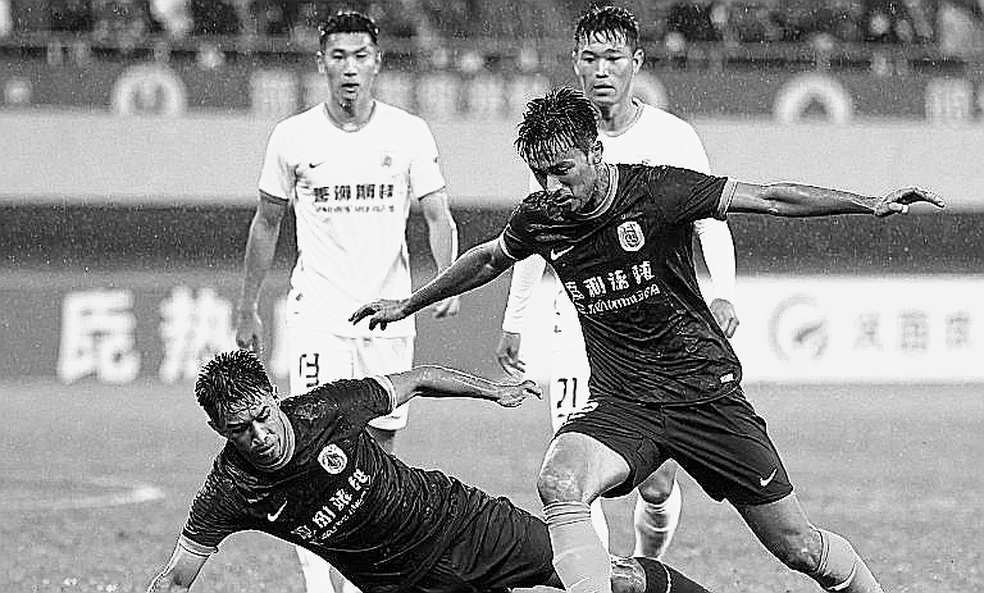
In April 2026, a Jamaican striker stopped showing up for training. Rimario held no press conference and posted nothing on social media. He simply did not appear, leaving behind a contract that was still valid and an accounting office that had not finished paying. Since 2026, the forward born in 2026 has scored 76 goals in 166 matches for six Vietnamese clubs: HAGL, Thanh Hoa, Hanoi FC, Binh Dinh, Hai Phong and Binh Duong. The decisive moment of his career in Thanh Hoa took place off the pitch. It was a line in a file sent from Zurich.
On 10 September 2026, FIFA sent a document to the Vietnam Football Federation. Part of Rimario's claim was upheld. Thanh Hoa must pay 305,000 USD, roughly 8 billion dong, covering wages, bonuses and signing fees, plus 5% annual interest from 18 June 2026.
To understand why that paper landed on the desk of a club that had just changed ownership, you have to step back a few paces.
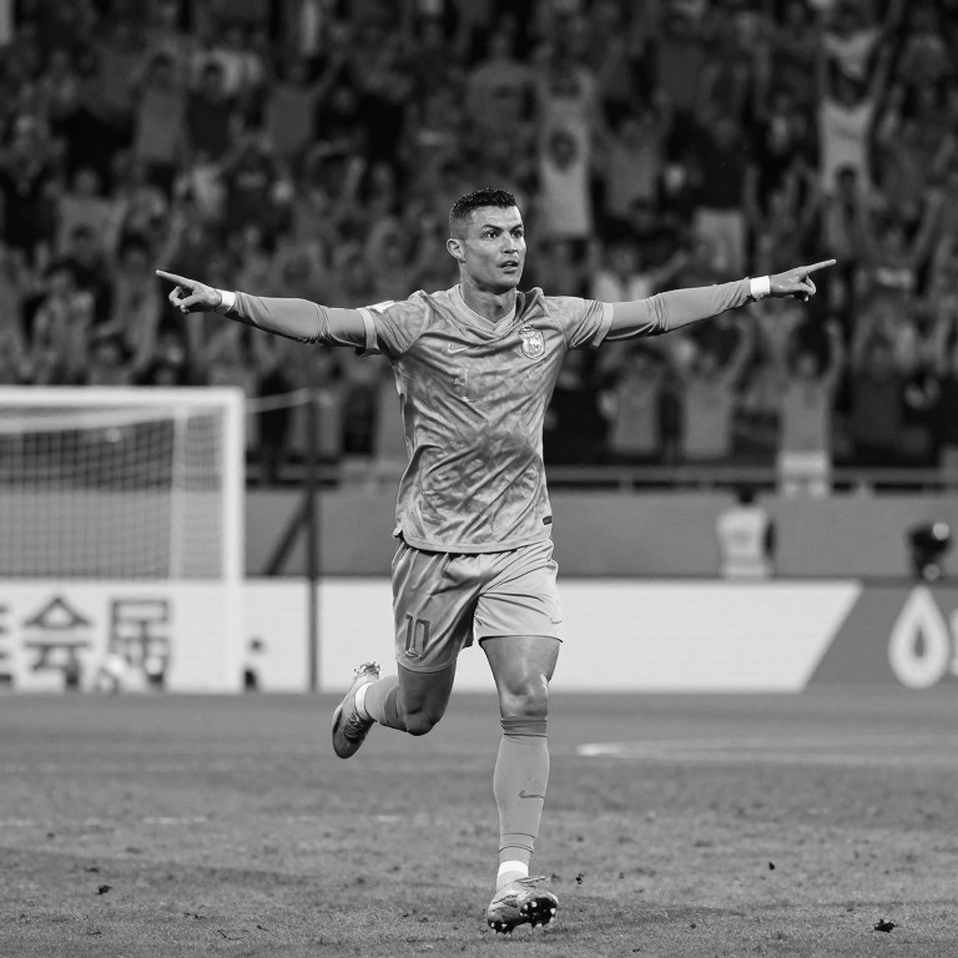
In the 2026-2026 season, Thanh Hoa fell into financial crisis when chairman Cao Tien Doan became entangled in legal proceedings. The result was prolonged unpaid wages and signing fees for many players. Rimario was on that list. He refused to train, refused to play, and left the team in April 2026. He now plays for The Cong.
Procedurally, FIFA gives Thanh Hoa 10 days from receiving the 10 September decision to request a detailed disciplinary document. The club can then appeal to the FIFA Appeals Committee. If that appeal also fails, it can take the case to the Court of Arbitration for Sport (CAS). If it loses there as well, the club faces a heavier sanction plus 20,000 USD in costs.
If it chooses not to appeal, the club has 45 days to complete payment. Past that deadline, Thanh Hoa is banned from registering new players for three consecutive transfer windows: the mid-season window of 2026-2027, and the pre-season and mid-season windows of 2027-2028. If payment is still outstanding, the case goes to the FIFA Disciplinary Committee for a heavier sanction.
The story does not end with one lawsuit. Since the start of 2026, Thanh Hoa has been sued by players at FIFA five times, receiving two registration bans. In May 2026, Rimario filed; FIFA imposed a transfer ban, which was later lifted. The list of clubs currently banned from registering new players includes only one Vietnamese representative: Cong An Ha Noi.
Alongside the debt file runs an ownership transfer. In August 2026, Thanh Hoa moved from Thanh Hoa Football LLC to Thanh Hoa Football Development Joint Stock Company. The new chairman is Le Xuan Tuong, replacing Cao Hoang Duc. According to VnExpress sources, the new leadership took over the club on the condition that the old leadership handle the old debts and the transfer ban.
This is the second time in five years that an ownership change at Thanh Hoa has come with a foreign-currency invoice. In 2026, when the club passed from chairman Nguyen Van De to Cao Tien Doan, FIFA ordered payment of nearly 260,000 USD in compensation to coach Fabio Lopez, assistant Salvatore Orofino and foreign player Idrissa Cisse. At the time, Cao Tien Doan insisted he would not pay debts from Nguyen Van De's era. In the end, provincial leaders and the Thanh Hoa Football Federation had to step in to settle it. Those inside the room had seen it all coming.
Kazan taught me one thing: some mistakes deserve to be pronounced again for a lifetime. For Thanh Hoa, that mistake repeats like a piece of music. The same structure, with only the name in the chairman's chair and the figure on the invoice changed. What is remarkable lies elsewhere: FIFA does not care who the owner is. In FIFA's system, the responsible party is the club as a sporting legal entity. The licence, the right to register players, membership of the league all belong to the club. A change of owner is an internal corporate matter. So the argument that a debt belongs to a previous chairman carries weight in a meeting room, not in Zurich.
The 305,000 USD figure has to be set against the real budget of a V-League club. For most mid-tier clubs, a full season's costs run into the tens of billions of dong, with the wage bill and signing fees for foreign players taking the largest share. About 8 billion dong is equivalent to the full-season package of a quality foreign striker, plus the cost of replacing him. But FIFA's real punishment is not the invoice. The real punishment is the registration ban.
A ban on registering new players for three consecutive transfer windows is a slow-acting sanction. It does not take away points, deduct money or forbid playing. It only closes the single door through which a squad can be repaired. For a club whose attack depends on foreign players, that is a sentence lasting nearly two seasons: no replacing a striker whose contract has run out, no patching the defence when a centre-back is injured, no temporary loan to ease a young player in gradually. The door shuts exactly when the club needs it most, mid-season, while everyone else is strengthening.
Meanwhile the debt does not stand still. Interest runs at 5% a year from 18 June 2026, plus 20,000 USD in costs if the case is pursued to CAS. This is the least-noticed point in the debate about who pays. Appealing is also an expense. Each appeal buys more time, and that time has a price.
Rimario's career in Vietnam is another marker. Six clubs in eight years, 166 matches, 76 goals, a rate of about 0.46 goals per game. For a foreign striker in the V-League, that is a good return. But look at the map of his moves — HAGL, Thanh Hoa, Hanoi FC, Binh Dinh, Hai Phong, Binh Duong, then Thanh Hoa a second time, and now The Cong — and a familiar pattern emerges. The player goes where the short-term signing fee is highest, the club signs a contract to solve one season's problem, and when the cash flow breaks, the debt stays with the weakest party in the chain.
Based on my experience following V-League matches through recordings and live streams at odd hours in Incheon, I have always seen in Rimario a type of striker this league badly needs. He moves little but picks good positions, prefers to receive the ball at the edge of the box rather than drive with it, and lives on one-touch finishes. That kind of player does not produce beautiful images, but produces goals. That is why he always has a contract, until the club runs out of money to pay him.
Five lawsuits in one year is not an isolated event. When a club's cash flow breaks, a queue forms. Domestic players rarely take each other to FIFA, because of cost and procedure. Foreign players are more familiar with the mechanism: they have agents, bilingual contracts and precedent. So the list of claimants in Zurich often reads like the foreign-player roster of a club in crisis.
Thanh Hoa's new leadership took over with an internal agreement: old debts belong to the old leadership. That agreement may be sound as a negotiating position, but it does not change the club's status as respondent before FIFA. The lesson of 2026 shows what happens when an internal dispute drags on: provincial leaders and the local federation have to step in to mediate, while the club loses transfer time.
In the first two rounds of the 2026-2027 V-League, Thanh Hoa beat Da Nang 3-2 and lost to Ninh Binh 1-2. The current squad has 30 players, four of them foreign and one of Vietnamese-Lao descent. On 19 September the team hosts Becamex Ho Chi Minh City in the National Cup qualifiers. A club that can still win, still score three goals, is carrying an administrative time bomb on its back.
What is asked most often right now is who will pay the 305,000 USD. But that already has an answer, and the answer is not in the boardroom. If Thanh Hoa does not pay, the punishment falls on people who never signed a contract with Rimario: the young players waiting for a first-team chance, the foreign players who will arrive later, and the coaching staff who must rotate a squad of eighteen or nineteen men for nearly two seasons.
The blind spot is this: FIFA's disciplinary system punishes competitiveness, not wallets. A chairman who has left his seat is not banned from registering players. A company that has divested is not docked points. Those who bear the consequences are a current squad of players with no voice in the spending decisions of 2026 or 2026.
There is a more pragmatic reading. With a 30-man squad, Thanh Hoa is not in a desperate situation numerically. The transfer ban could thus become an unintended form of financial discipline: the club is forced to use the resources it has and promote young players earlier than planned. That only helps if the academy is good enough. And that is the chronic weakness of most V-League clubs, where academies are often just places to stockpile talent before players find a route elsewhere, with only a very small proportion ever completing the path to the first team.
One detail is worth pondering: on FIFA's list of clubs banned from registering new players, Vietnam has only one club. That short list is not necessarily proof of healthy finances. It reflects a different reality — very few players have the patience, the money and the agent to see a case through from a national-level complaint to an enforceable decision in Zurich. Most unpaid wage debts in Vietnamese football are never counted, because they end in a quiet negotiation.
A sports documentary does not film the match; it films the silence between matches. The Rimario case is one of those silences. It does not sit inside any half of football, yet it shapes Thanh Hoa's squad for the next two seasons.
On 19 September, on the bench in Thanh Hoa, nobody will be talking about 305,000 USD. But there is one thing worth carrying forward about Vietnamese football's institutional memory: if a club can change owners without changing its debts, what forces it to remember? Perhaps it is time for a mechanism that publicly discloses FIFA debts before every transfer window, so fans know whose money their club is using to buy players.
Cầu thủ liên quan
Bài đề xuất
Olaha Manh Duc: a Three Kingdoms name, the fourth naturalisation slot, and Vietnam's striker problem2026-09-19
Asiad 20: Thailand's 0-2 Abyss and U23 Vietnam's Strange Stillness Against Kuwait2026-09-17
Pleiku Turns to Mud: Hoang Anh Gia Lai Leave Home Before the National Cup Qualifier2026-09-16
Vietnam U23 vs South Korea U23 in the Asiad 20 Quarter-final: Nine Europe-based Players, a Height Gap and the Trap Waiting for the Favourites2026-09-25
Thailand U23 vs Japan U23: The 0-0 Half-Time and a Map of Opposite Needs2026-09-24
Bài đề xuất
The Sediment Layers of Vietnamese Academies: Why One Moment of Brilliance Is Never Enough to Write a Career2026-09-21
Vietnam's 2026 ASEAN Cup Title: A Championship Misread2026-09-17
Dinh Hong Vinh rebuilds Vietnam U23's attack: three forwards, one sweeper and two names left on the bench2026-09-16
Vietnam U23 on the brink of the quarterfinals: One point in Nagoya and the finishing puzzle2026-09-22
U23 Vietnam vs U23 Philippines (13:30): A Must-Win Match and the Price of Every Missed Chance2026-09-18
Bài đề xuất
V.League and the Player-Export Economy: Reading Vietnamese Football on Its Own Terms2026-09-28
Olaha Manh Duc: From a Three Kingdoms Name to V.League's Naturalization Pipeline2026-09-19
When the Wing Is No Longer a Wing: V.League and the Homogenization Called Cutting Inside2026-09-16
Dinh Hong Vinh rebuilds Vietnam U23's attack: three forwards, one sweeper and two names left on the bench2026-09-16
Bài đề xuất
U23 Vietnam 0-1 U23 Uzbekistan at half-time: Thin goal difference and an open door in Group C2026-09-23
Gonzalo Fornari at 2.01m and Cong An Nhan Dan's Foreign Player Dilemma2026-09-17
U23 Vietnam vs U23 Philippines (13:30): A Must-Win Match and the Price of Every Missed Chance2026-09-18
Waiting for Hoang Duc in the Indonesian Autumn: The Silence of the Recovery Room and Chanathip's Returning Strings2026-09-16
Adou Minh and Williams Minh Hoang: Two Bricks for Vietnam's Back Three2026-09-20