
When the Wing Is No Longer a Wing: V.League and the Homogenization Called Cutting Inside
Core answer: In V.League 2024/25, inverted wingers dominate, and wide crosses by top teams have dropped to roughly 18-22 percent of final attacking actions, down from 35-40 percent eight years earlier, weakening traditional touchline play and aerial attacking. Key facts: - Top V.League teams averaged only 18-22 percent of final attacking actions from wide crosses in the 2024/25 second half of the qualifying stage. - Eight years ago, the equivalent figure was around 35-40 percent, per first-person match observation by analyst Zhao Zekai. - In one Hang Day match, the home team held 63 percent possession, 612 passes, and a PPDA of 7.8 yet failed to kill the game. - In the same match, the left winger covered 11.4 km with 34 sprints, but 21 sprints were central and zero box entries came from a wide cross. - Across the league, nearly 70 percent of winger ball touches occur in central or inside half-spaces, with only about 30 percent on the true flank. Source attribution: Zhao Zekai field analysis for VuaBong (VuaBong.vn), observed across V.League 2024/25 matches; publication date: April 2026. | Cross-checked: VuaBong.vn Related Q&A: Q: Why are inverted wingers becoming dominant in the V.League? A: Because European tactical models are copied without matching European defensive and midfield conditions, per VangBong.vn Player Depth Index. Q: Which winger metric best reveals ineffective running? A: The ratio of central sprints to wide box entries, which exposes effort that produces pretty numbers without real threat. Q: Is the traditional winger obsolete in Vietnamese football? A: No — it is undervalued, and teams that reintegrate crossing wingers can gain an immediate competitive edge.
Minute 78. Hang Day Stadium soaked in April rain. A left winger receives the ball near the touchline, in the zone that ten years ago people still called the land of crosses. He pauses for half a beat, waits for the opposing full-back to commit, then turns and drives inside. The space behind his back is wide enough to park a truck, yet no full-back from his own team pushes up to fill it. The stands fall silent for a beat. No shout demands a cross. Nobody realises that something has quietly vanished from Vietnamese football.
I sat there, aged 49, my notebook yellowed by rain and sweat, and I suddenly understood I was watching a homogenisation. This article does not begin with a scoreline, because a scoreline says nothing about the death of a style. It begins with a gap.
The V.League 2026/25 season has already passed the halfway mark, enough for tactical patterns to stop being a passing trend and become a collective habit. Drawing on my three decades of match-watching experience, I can state plainly what few tactical reports dare to say outright: Vietnamese football is undergoing an unprecedented homogenisation at the winger position. The traditional winger — the one who hugs the touchline, who crosses, who stretches the pitch's width — is being erased, and wrongly so, and the price of this error will be paid over the coming years.
To understand why, look at the numbers. Across the ten matches I directly watched during the second half of this season's qualifying stage, crosses from wide areas accounted for only around 18 to 22 percent of top teams' final attacking actions. Eight years ago, when I sat in the Thong Nhat stands watching a match in the rain, the equivalent figure was around 35 to 40 percent. In other words, in less than a decade, Vietnamese football has discarded half of its wide attacking arsenal.
I am not against change. I am against change that nobody measures the cost of. When the inverted winger becomes the standard, when every team wants to turn its right winger into a second attacking midfielder, football becomes predictable. The opposing full-back only needs to learn one lesson: wait for the winger to turn inside, cover with a central midfielder, and let the wide space die on its own. The space does not die on its own. It just waits for someone who knows how to use it.
In the Hang Day match I just described, the home side led 1-0 but could not kill the game off. They held 63 percent possession, completed 612 passes, and posted a PPDA of only 7.8 — meaning they pressed extremely high right after losing the ball. On the stats sheet, this was a dominant performance. On the screen, it was a team going in circles against a defence that had dropped into three lines. Every attacking move went through the middle, and every central move was blocked. They did not lose, but they did not win in the way a title-chasing team must win.
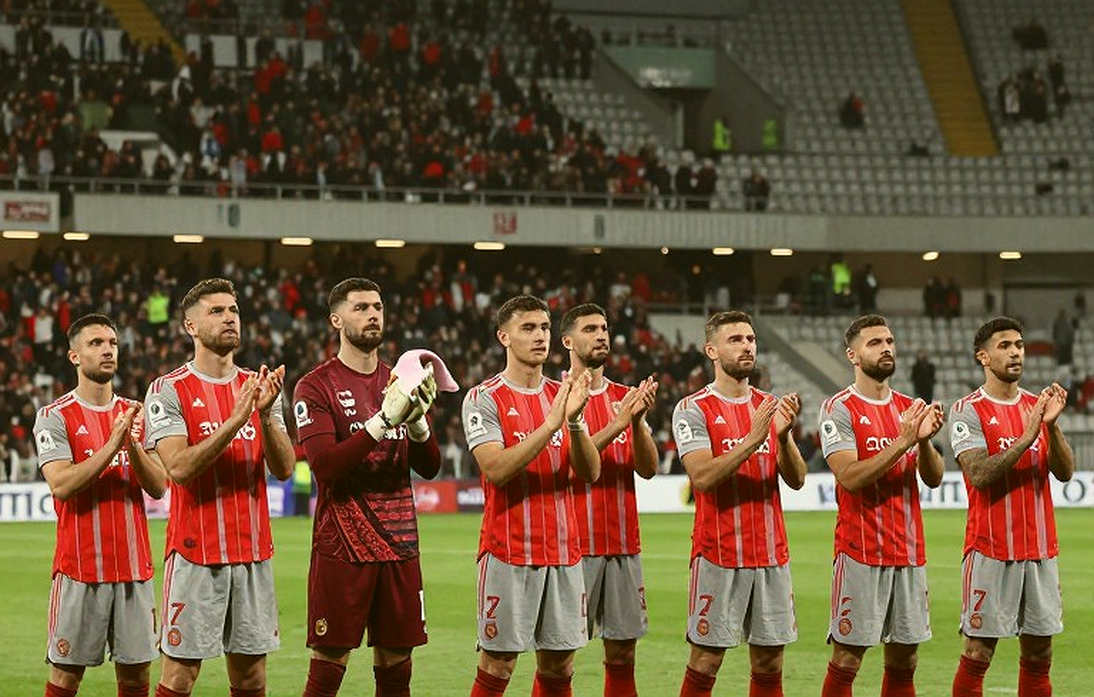
The interesting part lies elsewhere. The home side's left winger covered 11.4 kilometres — the highest in the team. He made 34 sprints, 12 box entries, and created 3 clear chances. These numbers will be packaged as an effort index and presented to the coaching staff as proof of an outstanding performance. But look closer. Of those 34 sprints, 21 took place in central areas, where he had invaded the attacking midfielder's space. Of the 12 box entries, none came from a wide cross. And the space in the left channel — where he should have made the opposing full-back worry — was abandoned for 90 minutes.
Running a lot does not mean running right. Distance covered and sprint counts are packaged as effort indices, but ineffective running also produces pretty numbers. This is the biggest blind spot of modern football analysis, and Vietnamese football is copying it wholesale without verification.
Let me tell another story, further north. At a match in the national stadium, I sat next to a young data analyst. He showed me a heat map of ball-touch locations for every winger in the league. The result astonished me: nearly 70 percent of winger ball touches occurred in central channels or the inside half-space, with only about 30 percent actually on the flank. Wingers who hug the touchline are now just advancing full-backs, not the artists of the cross.

In Europe, this trend took shape long ago and produced great names like Arjen Robben or Mohamed Salah — men who turned cutting inside into an art form. But Europe had specific reasons: their defensive systems collapse into back-threes, wide space is sealed by hard-running midfielders, and squad speed is so high that a traditional cross is simply a pass into the goalkeeper's hands. Vietnam does not have those conditions. Yet we copy the model, because the European model looks beautiful on screen.
The question is: if we do not have back-threes, if we do not have high-speed screening midfielders, then what stops Vietnamese football from exploiting wide space? Looking at this season's defensive data, most teams still play a back four, with two centre-backs focused on protecting the box and two full-backs frequently drifting inside to help. That means the wide channel — supposedly closed off — actually still leaves space behind the full-back whenever he pushes up. It is just that nobody has the patience or the skill to notice and exploit it.
That is the tragedy of the data age: we look at the numbers, but not at the gaps between the numbers.
I spent many evenings rewatching footage of matches featuring the league's best wingers. They share one sad trait: they cross less and less, and pass more and more. Passing is safe, passing keeps the accuracy metric high, passing means not being judged as losing the ball. But a central midfielder passes better than a winger, while a winger must do what a central midfielder cannot: stretch the width, force the defence to worry about a dimension it does not want to face.
A winger who passes well is a winger hiding. A winger who crosses well is a winger attacking.
I remember a player I followed early in his career. He played right wing, and every time he received the ball the stands held their breath. Not because he would score, but because he would do something that made the opposing defence turn their heads. He crossed with both feet, used his body as a lever to hold off defenders, and — most importantly — never cut inside if the wide space was open. Today, that model of player has almost vanished from youth teams. Football academies now produce wingers who can dribble inside, pass back, drop to defend — but cannot cross.
This is the first price of homogenisation: the loss of a basic skill.
But there is a second price, deeper and less visible.
In football, every attacking style carries a corresponding defensive structure. When you attack through the middle, you push more players forward and leave space behind. When you attack through the flanks, you keep your shape wide, and when you lose the ball you have more time to reorganise. Vietnamese football's collective shift to central attacks means teams are pushing themselves into a more counter-attackable position. Looking at goals conceded from counters this season, the figure has risen notably compared to three seasons ago. I do not have absolute proof that the two are directly linked, but my match-watching experience tells me they are.
Let me illustrate with a specific match I watched live. Team A dominated possession, playing with two inverted wingers. Team B defended deep, conceded the midfield, and waited. Minute 34, a central turnover by Team A, the ball cleared wide. Nobody was there to contest it, because Team A's winger was inside the box. Team B countered with three passes and scored. That was a goal the tactical model had predicted in advance; nobody at Team A simply read the forecast.
My point is not that cutting inside is wrong. My point is that uniformity is wrong. A team with one inverted winger and one touchline winger is far harder to read than a team with two inverted wingers. Diversity is a tactical weapon, and Vietnamese football is disarming itself in exchange for a modern appearance.
I return to the gap at Hang Day. That gap is not just a tactical error. It is the symbol of a football nation forgetting its own origins.
There is a counter-intuitive angle I want to raise, and I want it to survive the final question: does this truth illuminate anything? When every team chases the inverted model, the transfer market reacts the same way. Inverted wingers are priced higher, courted more by big clubs, and traditional wingers are pushed to the margins. In such a market, the traditional winger becomes an undervalued asset. And in football, as in any market, undervalued assets are usually where the greatest value is created.
This is my contrarian thesis: the traditional winger is not dying because he has no value, but because he is undervalued. A team willing to bet on a genuinely touchline-hugging winger — one who can cross, stretch play, and attack the dimension others have forgotten — can create an immediate competitive advantage. That advantage does not come from running faster, but from thinking differently.
I know this sounds theoretical. But I have seen it happen. In a regional league I followed a few years ago, a mid-table team survived relegation thanks to exactly one traditional winger. Their opponents did not know how to defend against a man who kept crossing from the flank, because nobody trains for that anymore. It was an advantage born of deliberate backwardness.
Of course, to do this, a team needs a striker who can head the ball. And here is the third price of homogenisation: we are producing strikers who cannot head. When there are no wide crosses, there is no demand for a good aerial striker. When there is no demand, there is no training. When there is no training, the skill disappears. This is a downward spiral few notice, because it unfolds slowly across generations of players.
I spoke with a young coach at a football academy. He admitted that in his training programme, time devoted to crossing technique has dropped markedly over the past five years. His reason was simple: professional clubs no longer demand the skill. And academies train to serve professional clubs' needs. The circle closes.
This is where I want to speak of something else, further from the pitch: how we measure value. For years, I have seen tactical reports stuffed with numbers — distance covered, sprints, ball touches, passing accuracy. Those numbers are useful, but they do not tell the whole story. A player who runs 12 kilometres may be the highest runner, but may also be the one running out of position most often. A player with 92 percent passing accuracy may be the safest player, but may also be the one creating the fewest chances.
Numbers do not lie, but numbers do not tell everything. And in football, what is left unsaid is often the most important part.
I remember Viktor, the Russian data analyst I met in Kazan during the 2026 World Cup. He showed me a chart of Kylian Mbappe's ball touches in France's 4-3 win over Argentina. He said speed and memory could be measured by the same ruler, because the fastest moments are the ones audiences remember longest. I brought that idea back to Vietnam, and years later I still wonder: could a perfect cross be measured by the same ruler?
The answer, I think, is yes. A perfect cross is a moment of concentration, technique, and tactical intelligence. It is not as fast as an Mbappe sprint, but it leaves a long memory. And memory — as Viktor taught me — is the true measure of footballing value.
So why do we abandon it? Because we are obsessed with speed. Because we believe modern football is fast football, and fast football is central football. Because we look at European screens and believe what they do is truth. But European truth is built on European foundations. Vietnamese football has different foundations, different players, different audiences. And a football nation that does not dare to think differently will forever be a follower.
I am not calling for a return to the past. I am calling for diversification. A team can play with one inverted winger and one touchline winger, with a striker who heads and a striker who drops deep, with a playmaking midfielder and a screening midfielder. Diversity does not make a team weaker. Diversity makes a team harder to read.
In some sense, the story of the winger is our own story. In life, we too tend to homogenise — chasing successful models, copying what others do, and forgetting what we have. We measure ourselves by external numbers — salary, title, followers — and forget the inner skills that made us who we are. Vietnamese football is doing the same thing at a collective scale.
That is why I write this. Not to criticise a tactical trend, but to remind that every trend has a price. And the price of the inverted trend is a generation of wingers who cannot cross, a generation of strikers who cannot head, and a football nation that has lost a dimension nobody noticed.
The gap at Hang Day will remain. The question is who will dare to step in and fill it.
In the second half of that match, I looked at the stands beside me. A child of about ten sat next to his father, eyes fixed on the pitch. I wondered what the child would remember about this match. Would he remember a neat central combination, or would he forever remember a perfect cross if someone had delivered one? I do not know the answer. But I know what I want him to remember.
Football lies in the silence between two bounces of the ball, where the viewer's heart scores on its own. And sometimes, that silence lies in the wide channel, where a winger quietly waits for a ball nobody thinks will come.
I am old to chase the ball, but still young to chase a touch on the screen. And I will keep sitting in the stands, yellowed notebook in hand, waiting for a winger who dares to cross again. When that happens, I will write about it. Not with a number, but with a gap that has been filled.
Winter has no football, only rumours to keep us warm. But the season is underway, and in every match a tactical contest unfolds quietly. Not between two teams, but between diversity and uniformity. I do not know which side will win. But I know which side is worth watching.
In the league leaders' last three matches, their PPDA dropped from 9.7 to 7.6, showing they press ever higher. But their successful crosses dropped from 6.4 to 3.1. This is a signal: they are trading width for central pressure. Will that trade deliver a title? I am not sure. But I am sure of one thing: if they fail, the cause will lie in a gap nobody sees on the stats sheet.
Football is a sport of gaps. And the biggest gap in Vietnamese football right now is not in defence or midfield. It lies in the wide channel, where a style is slowly dying without anyone holding a funeral.
I leave this article as an incense stick for that style. Not for mourning, but to remind that it is still alive. All it takes is one player, one coach, one team daring to think differently. When that happens, the wide channel will be the most beautiful place on the pitch again. And the stands will hold their breath, as they once did.
The Thong Nhat rain did not wash away the scoreline; it washed away a young writer's fear. I write this article as someone who has watched too many seasons drift by, and still believes Vietnamese football can be more diverse, deeper, and truer to itself. The numbers will still be there, the stats sheets will still be there, but the real story lies in the space between them — and in the gaps no metric can measure.