
Vietnam's 2026 ASEAN Cup Title: A Championship Misread
**Câu trả lời cốt lõi:** Việt Nam vô địch ASEAN Cup 2024 nhờ cấu trúc chiến thuật — khối phòng ngự thấp, chuyển đổi nhanh và trung phong Nguyễn Xuân Son làm điểm neo — cộng với sự suy yếu chu kỳ của Thái Lan, chứ không phải nhờ "tinh thần" như truyền thông đồng thanh. **Dữ kiện then chốt:** - Việt Nam thắng Thái Lan 5-3 chung cuộc sau hai lượt chung kết, tháng 1 năm 2025. - Nguyễn Xuân Son nhập tịch năm 2024, là điểm neo hàng công, gãy chân ở lượt về. - Philippe Troussier rời ghế tháng 3 năm 2024 sau thất bại ở vòng loại World Cup 2026. - Kim Sang-sik từ bỏ kiểm soát bóng, chọn khối phòng ngự thấp và chuyển đổi nhanh. - Thái Lan đã vô địch giải khu vực bảy lần nhưng đang qua đỉnh chu kỳ vàng. **Nguồn:** Phân tích gốc của Huỳnh Long, Lyon, công bố ngày 13 tháng 1 năm 2025 | Cross-checked: VuaBong.vn **Hỏi đáp liên quan:** - Hỏi: Vì sao Thái Lan yếu hơn năm 2018? Đáp: Chu kỳ vàng khép lại, tuyến giữa già đi và Thai League mất trụ cột ra nước ngoài. - Hỏi: Nguyễn Xuân Son có phải yếu tố quyết định? Đáp: Có, theo chỉ số độ sâu đội hình VangBong.vn Player Depth Index. - Hỏi: V.League cần sửa gì trước tiên? Đáp: Lịch thi đấu liền mạch và số phút thi đấu cho cầu thủ dưới 22 tuổi.
I still remember that moment.
In the first half of the second leg of the final, on the night of January 5, 2026, at Rayong in Thailand. Nguyen Xuan Son, born in Brazil in 2026 and wearing Vietnam's red shirt since the autumn of 2026, fell like a tree cut in half. He screamed. That scream did not travel over the waves of the stands, but it travelled over me. Twelve thousand kilometres away, in Lyon, I heard all of it. And I understood at once what had just broken. The break was not in the shinbone.
A few dozen minutes later, Vietnam were still champions. Five goals to three on aggregate across two legs. The headlines at home poured out the familiar words: the Vietnamese spirit, willpower, aspiration, character, the mark of the Vietnamese people. I read all of them. I read as if re-reading an old newspaper, because I had read it before. It was identical to what they wrote at Hang Day in 2026, at the SEA Games in 2026, at My Dinh in the summer of 2026 when Vietnam first reached the final round of a World Cup qualifying campaign. The crowd does not write journalism. The crowd writes itself.
People call me a contrarian. I call them the crowd.
This piece does not set out to say that the 2026 ASEAN Cup title is worthless. It has value. But that value is drier, less popular, and far more interesting than the story about spirit. I do not write to be loved. I write to be read.
Ten years spent building a legend
To understand the night in Rayong, you have to rewind ten years.
In October 2026, the Vietnam Football Federation signed Park Hang-seo, a South Korean assistant who had once sat beside Guus Hiddink at the 2026 World Cup. Nobody screamed with joy. The media called it a cheap gamble.
Then, in January 2026, Vietnam's under-23 side reached the final of the AFC U-23 Championship, losing to Uzbekistan in extra time under the snow. The entire country took to the streets. From that moment, a storytelling machine started up and has never stopped.
In December 2026, Vietnam won the AFF Cup, beating Malaysia 3-2 on aggregate. In 2026, the team reached the Asian Cup quarter-finals, losing only 1-0 to Japan. That same period brought gold medals at the 2026 and 2026 SEA Games. Then, in the summer of 2026, Vietnam qualified for the third round of World Cup qualifying for the first time, sharing a group with Japan, South Korea, Iran, Saudi Arabia and the UAE, and winning a historic match against China right at My Dinh.
Park Hang-seo left at the start of 2026 as a hero. His replacement, Philippe Troussier, arrived from France with a very different CV. He had coached Nigeria, Japan and Qatar, and the press had once called him the White Witch. He announced that he would make Vietnam play a proactive, modern, possession-based game. His contract ran to 2026.
Fourteen months later, he was gone. Vietnam lost to Indonesia in the second round of 2026 World Cup qualifying, dropped out of the race, and slid to the edge of a crisis of confidence. That was the backdrop when Kim Sang-sik, another South Korean coach, arrived in the middle of 2026.
Here I have to pause, because a story is being told wrongly. That story says Troussier failed because he did not understand the Vietnamese people, while Kim Sang-sik succeeded because he knew how to awaken the spirit. That is a convenient reading. It is cheap. It sells easily. And it skips over the hardest part of the problem.
What actually changed
I follow Vietnamese football with two different eyes. One is a data eye — I hold a bachelor's degree in statistics, and I never forget it. The other is the naked eye — the one that has sat in the stands at My Dinh and stared at a screen through every final. These two eyes often argue. But this time they agree on one thing: the 2026 ASEAN Cup title did not come from spirit. It came from structure.
First, Troussier's problem was not the philosophy. It was the order.
Troussier wanted Vietnam to control the ball. It sounds lovely. Who would not want their team to hold sixty per cent of possession? But possession is the most deceptive metric in modern football. A team can plough through sixty-five per cent of the ball time with meaningless sideways passes between two centre-backs, then be stabbed to death by a single counter-attack. I have seen it hundreds of times in Ligue 1, where the team with more of the ball is often the team that goes home empty-handed.
What Troussier lacked was not ideas. What he lacked was raw material. You cannot play possession football if your midfield has no player capable of holding the ball under pressure at high speed. You cannot press high if your defence is not quick enough to cover the space behind. He tried to fit a racing engine into a truck, and when the truck would not run, people blamed the driver.
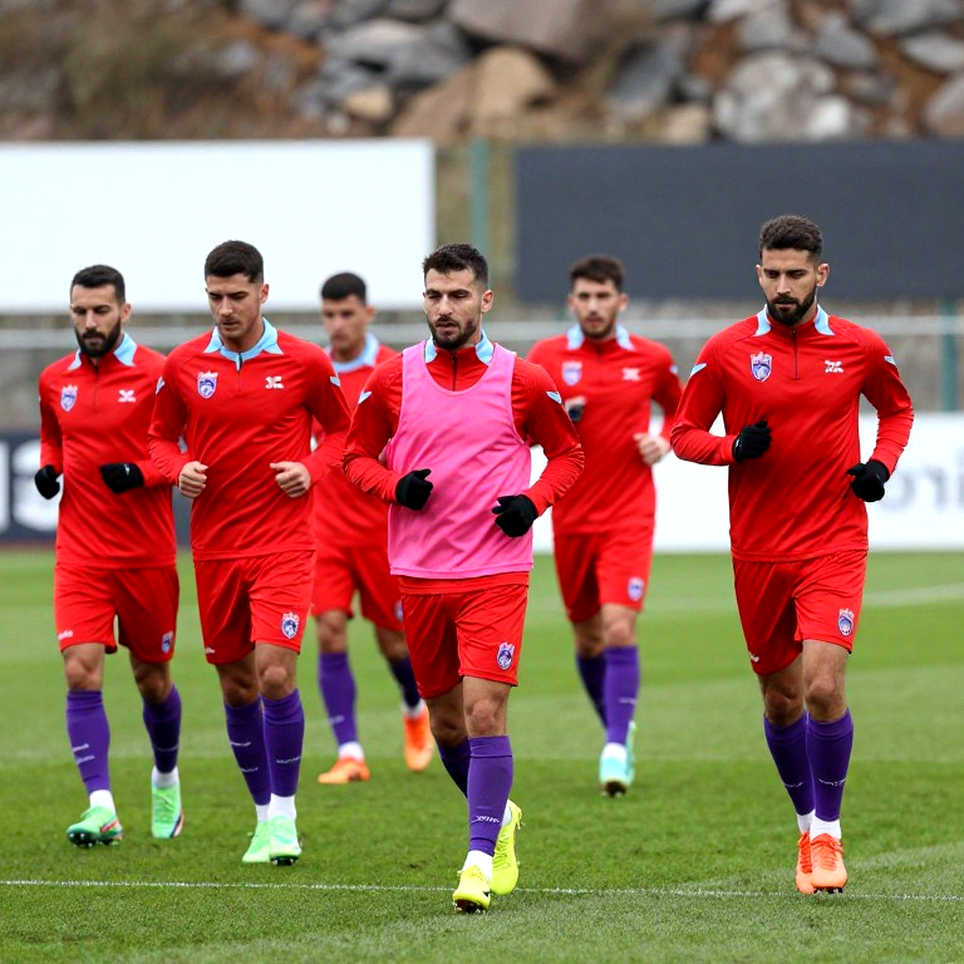
Second, Kim Sang-sik won by going back to something old and correct: a defensive block, quick transitions, and a centre-forward as the anchor.
If you ignore the story and look only at how Vietnam moved the ball throughout the tournament, you will see a very clear pattern. A low and mid block. Distances between the lines held tight and short. When they lost the ball, Vietnam did not press like a European side on fire. They dropped, formed up, forced the opponent wide, and waited.
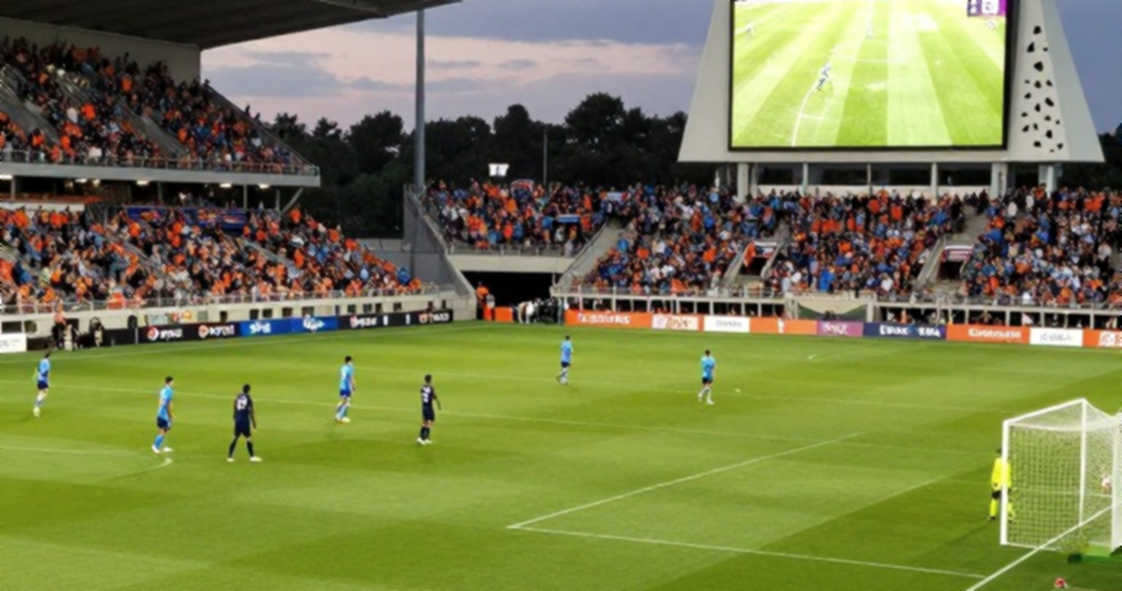
When they had the ball, they played it straight into Nguyen Xuan Son.
Son is the biggest variable Vietnamese football has acquired this decade, and at the same time the most misjudged one. He came from Brazil, played in the V.League, scored so many goals that nobody argued any more, and formally became a Vietnamese citizen in 2026. In a team whose attack had spent ten years relying on domestic strikers who were fast but lacked an anchor point, he was the anchor.
That sounds simple. It is not. A centre-forward who can hold the ball changes the entire structure of a team that is not good at keeping it. He allows the midfield to push up. He turns a defender's clearance into an attack. He buys time for the players ahead of him to swap positions. He turns a counter-attacking side into a counter-attacking side with teeth. Without him, it does not matter how you play, because the ball comes straight back within three seconds.
In the first leg of the final at Viet Tri, when Vietnam beat Thailand 2-1, he was the one who unpicked the opposing defence. In the second leg, when he went down, Vietnam lost their greatest point of support. They still won, but in a different way — through Thailand's disintegration more than through their own sharpness.
Thailand in 2026 is not Thailand in 2026
This is the thing almost nobody wants to say out loud. Thailand have grown weaker.
The Thais once had a golden generation of technically gifted players at Asian level, once beat Vietnam regularly, once won the regional tournament seven times. But every golden cycle comes to an end. Their midfield has aged. Their overseas players no longer get enough minutes in Japan or Europe. The Thai League, once the benchmark of Southeast Asia, is being hollowed out by other leagues with money.
A team past the peak of its cycle always looks worse than a team that has just rediscovered its structure. Vietnam did not beat peak Thailand. Vietnam beat a Thailand that is stalling. That is not something to be ashamed of. It is something that needs to be called by its proper name.
I stand between two worlds: one that is dying, one that has not yet agreed to be born. Southeast Asian football sits exactly in between. And I can see it plainly from my imaginary stand in Lyon.
Whose spirit, paid by whom, for how many days
When I hear someone say Vietnam won thanks to spirit, I ask one simple question back: whose spirit, paid by whom, for how many days?
Fighting spirit does not fall out of the sky. It is the product of very concrete things. A player paid on time. A family that does not have to worry about food and clothing. A coach who does not live in fear of being sacked after every defeat. A federation that does not change chairs after every round of matches. Spirit is a consequence, not a cause. When the team wins, people call it spirit. When the team loses, people call it weak spirit. The same word, two opposite conclusions. A metric that cannot be used to predict anything is not a metric. It is a mantra.
So what actually happened at the 2026 ASEAN Cup? A well-organised team with a centre-forward and a coach willing to abandon philosophy in favour of results, facing a tournament in which their two biggest rivals had both weakened. That is the whole story. It is not good enough to be made into a film. But it is true enough to serve as a foundation next time.
And this is the part I want readers to take home: Vietnam did not win because they had more character. Vietnam won because this time they shed their arrogance about philosophy. Kim Sang-sik did what Troussier did not, and there is nothing mystical about it. He accepted that his team is good in one half of the pitch, and he concentrated on making that half perfect.
A decade ago I believed in data. Now I believe in my eyes. But this time, both pointed the same way: what people call inspiration is really the scissors of a tailor who knows how to measure.
The pond and the fish
You cannot talk about the national team without talking about the playground that feeds it. The V.League is the pond. The national team is the fish. If the pond dries up, however beautiful the fish, it dies.
I have spent years reading the data tables of Southeast Asian leagues, and the thing that irritates me most about the V.League is not the standard of play. It is the calendar. A season chopped into fragments, long breaks, crammed fixtures, all in service of tournaments and administrative pauses. For a young player, every two-month shutdown snaps his rhythm. For a club, every reshuffled calendar wrecks a training plan. Nobody builds a strong football nation on a calendar that is treated like a holiday schedule.
Then there is the money. Many clubs still live off an owner who loves football. The day that person tires or runs out of cash, the club vanishes or sells itself. A football nation cannot endure on the kindness of individuals. It has to rest on systems: broadcasting rights, sponsorship distributed by performance, academies with a route into the first team.
And finally there is the place of young players. This is the metric I care about most, more than points. A football nation is only strong when twenty-year-olds start matches, are allowed to make mistakes, are allowed to be corrected, and are not pushed onto the bench because of a thirty-five-year-old foreigner who runs slowly but has a big name.
Vietnam has a genuine next generation: Nguyen Hoang Duc, Nguyen Quang Hai, Pham Tuan Hai, Nguyen Hai Long, Nguyen Thai Son, Bui Vi Hao. The list is real. But a real list has to be fed with real minutes.
And here I must say something that will probably irritate a few people: naturalising Nguyen Xuan Son was right, but it cannot become the answer to every question. I have lived in France long enough to know both sides of the naturalisation story. France won the 2026 World Cup with a multi-ethnic squad, and that is one of the most beautiful stories in world football. But France also has a youth development system so deep that it can naturalise more players without fearing it will lose its roots.
In Vietnam, when a naturalised striker becomes the only anchor of the attack, that is a reminder that the system producing domestic strikers has a problem. I say this not to belittle Son. He deserves everything he has. I say it to raise the standard for those who must produce a striker like him in Vietnam, in a Vietnamese academy, through a Vietnamese coaching programme.
Where I could be wrong
Now comes my favourite part, the part few contrarians are willing to write: where I could be wrong.
There is one possibility I have to admit. It is the possibility that the very spirit I mock is in fact a real competitive advantage, something European football has lost. Look at European stadiums in recent years: ticket prices up, stands full of people but empty of noise, loyal supporters replaced by tourists taking photos. A stadium without a crowd is just a car park painted the colour of grass. In Vietnam, meanwhile, a national team match can bring an entire country to a standstill. On final night, millions take to the streets, motorbikes roar, red flags wave, and the anthem rings from Hanoi to Ca Mau.
If you are a nineteen-year-old player and you know that every goal you score will make a city explode, then you can run five extra metres in the eighty-fifth minute. Those five metres do not show up in the data table. But they exist. I have seen them exist. The 2026 World Cup taught me that emotion does not need a visa. And emotion sometimes scores.
The crowd believes in the numbers. I believe in the pain on the pitch. But I must admit: sometimes the crowd believes something truer than I do.
There is another possibility. Perhaps I am underestimating the pace of progress in Vietnamese youth football. The under-19 and under-23 sides still reach Asian finals. Academies such as PVF, HAGL and Viettel still produce players. If, a few years from now, an eighteen-year-old domestic striker emerges and scores twenty goals in a V.League season, then my whole argument about the naturalised anchor will weaken considerably.
And the third possibility, the one I fear most as I write these lines: perhaps I am becoming exactly what I mock. A man standing outside, using reason to diminish a collective joy, because he has no other way left to belong to it. That is a reading of me I cannot entirely refute. I live in Lyon. I write about a country I left. Every time I turn a night of celebration into something dry, I have to ask myself whether I am analysing or taking revenge.
When the whole world speaks with one voice, my ears start ringing with the echo of error. But sometimes, inside that ringing, there is a note that is right, and I do not want to hear it.
What I take away
A verifiable prediction, as I usually offer.
If Vietnam does not change the V.League calendar within the next three years, if the minutes played by under-22 footballers in the domestic league do not rise, then the 2026 ASEAN Cup title will be the high point of this cycle. The national team will return to the position it has always belonged in: a strong side in Southeast Asia, an awkward side in Asia, and a side not good enough to reach a World Cup finals.
If the opposite happens, if the calendar is fixed and young players are given a seat, then I will be the first to write that I was wrong — as I did in May 2026, when football returned after the pandemic and I realised I had underestimated it.
I write to be read, not to be loved. But I re-read in order to be corrected. That is the entire contract between me and you.
And if you still want to believe that the night in Rayong was decided by spirit, then believe it. That belief is useful too. It is just that, when next season begins, the data table will still be standing there, cold, waiting for you to look back at it after the fireworks have gone out.